
 06 February 2026
 Alisher Rahimov
 369
369
 711
711
 0
0
 Share
Share
 Download
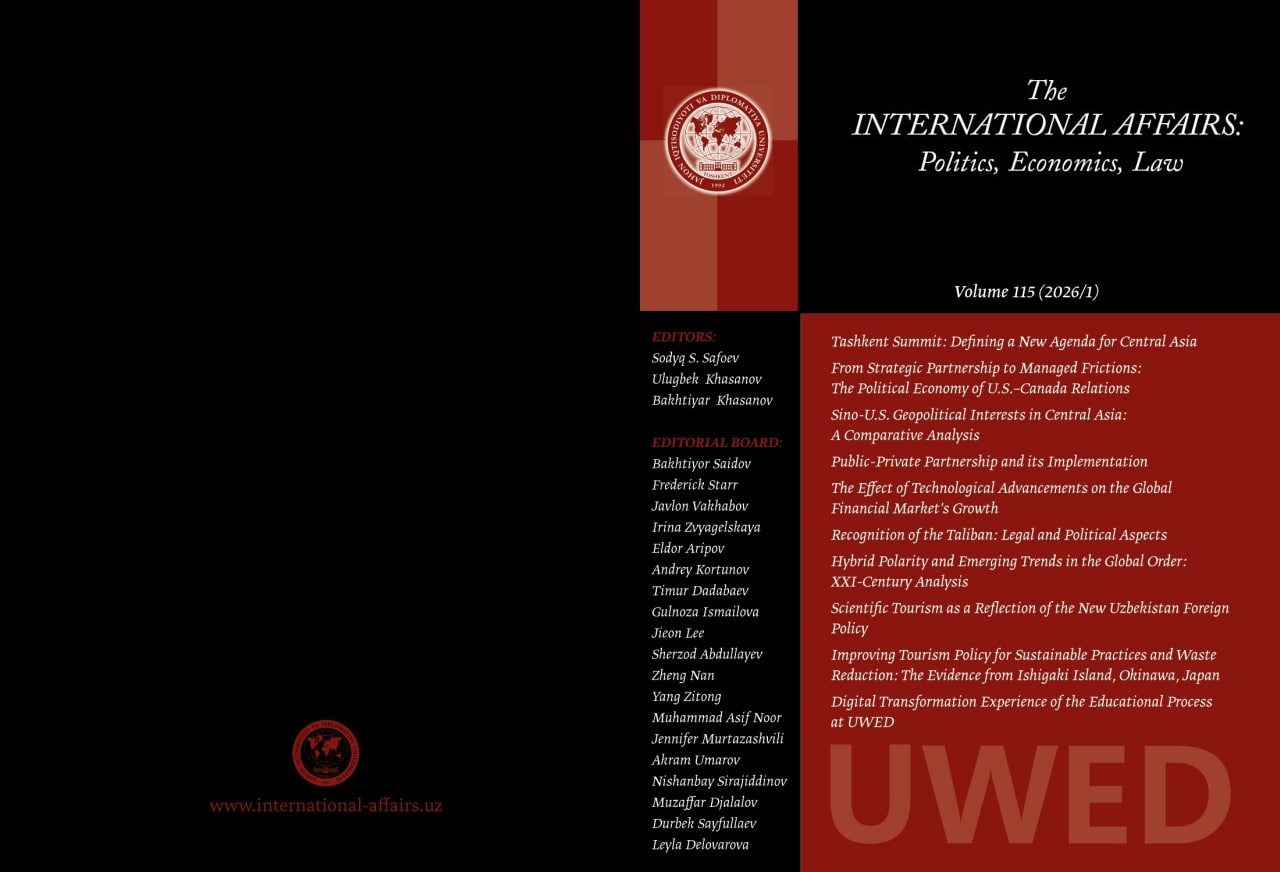
RECOGNITION OF THE TALIBAN: LEGAL AND POLITICAL ASPECTS
Author:
Alisher Rahimov — Associate Professor, Department of International Relations, University of World Economy and Diplomacy (UWED)
Abstract:
This article examines the approaches of countries in the international community towards the Taliban government in Afghanistan, which came to power in 2021 – a significant event with domestic, regional, and global implications. In addressing the issue of recognizing the Taliban government, key external actors are responding with caution, guided by strategic calculations, political values, and long-term foreign policy objectives in regions adjacent to Afghanistan. States with vested interests in Afghanistan are broadly divided into two camps, each conditional. On the one hand, a group of Western states faces challenges in engaging with and recognizing the Taliban government; on the other hand, regional powers are attempting to fill the strategic vacuum left by the United States and its allies by engaging more actively with the Taliban.
Keywords: Islamic Emirate of Afghanistan, Taliban, international law, de jure recognition, de facto recognition, international community, Central Asia.