
 06 February 2026
 Shakhzodbek Makhmudov
 459
459
 534
534
 0
0
 Share
Share
 Download
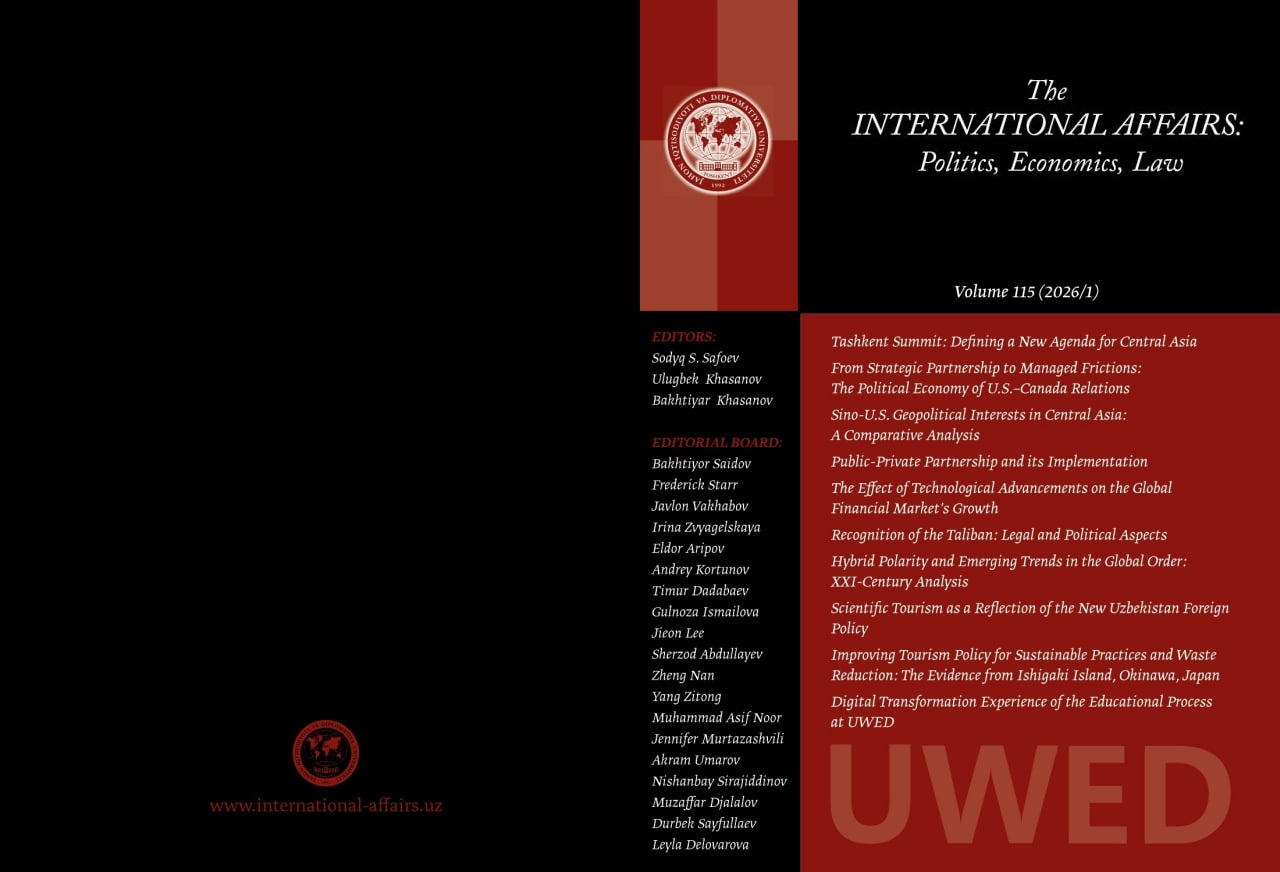
HYBRID POLARITY AND EMERGING TRENDS IN THE GLOBAL ORDER: XXI-CENTURY ANALYSIS
Author:
Shakhzodbek Makhmudov — PhD Candidate in International Relations, University of St Andrews (United Kingdom)
Abstract:
The current international system is one that is increasingly becoming more complex as it defies the understanding of unipolarism, bipolarism, or multipolarism. This article focuses on the fundamental shifts in world power balance, paying attention to how hybrid systems that combine state power with other technologically, economically, and institutionally influenced factors evolve. The world order at the moment is a mix of competing forces, allowing some to dominate particular regions as unipolarity gives way to multipolarity. Emerging trends such as the ongoing tussle between the United States and China, the rise of India, the European Union, and multinational, digitally administered corporations are also being discussed. The gaps left by the United States abandoning several of its unilateral safeguarding policies allow newly configured, powerful states to step in and shift the equilibrium. This piece of work on world governance and world stability seeks to fill the void by combining theories and practical examples to propose a new identifying principle for assessing a country’s multipolarity in this digital century.
Keywords: Hybrid polarity, global order, power distribution, economic interdependence, U.S.-China competition, digital governance, geopolitical shifts, non-state actors.